September 21, 2026
Pool surface changes often develop gradually, making early wear easy to overlook. A rough patch may become uncomfortable, a faint stain may deepen, or a small chip may expose more of the finish. Although these symptoms have different causes, they can show how the interior finish, waterline tile, or coping is responding to age, water conditions, weather, and use.
Appearance and function are closely connected when it comes to pool surfaces. Some marks are cosmetic, while others may suggest that the finish has eroded, lost its bond, or developed an opening where water could escape. Recognizing these distinctions helps owners discuss the pool's condition with pool resurfacing companies and decide whether a professional evaluation is appropriate.
Rough or Uncomfortable Areas
A finish that once felt smooth may develop rough areas on the steps, benches, walls, or pool floor. This can happen as material wears unevenly, plaster becomes etched, or mineral deposits accumulate over the finish. Pebble and quartz pools have intentional texture, but areas that feel noticeably different from the surrounding surface may indicate deterioration. That difference can affect both appearance and comfort throughout the pool.
The location and extent of the roughness provide useful context. One isolated area may reflect localized wear, whereas changes across much of the interior could point to broader deterioration. Professionals from pool resurfacing companies can distinguish deposits resting on the finish from material loss within it, which helps show whether resurfacing should be considered.
Cracks, Chips, and Small Openings
Not every visible line across a pool finish has the same significance. Fine cracks may remain near the surface, while widening, recurring, or deeper cracks can indicate more substantial deterioration. The direction, position, and surrounding condition of a crack may be as informative as its width. Chips around steps, fittings, corners, and benches can likewise show that the finish has weakened in a vulnerable area.
Crumbling edges, discoloration along a crack, or nearby water loss can make the condition more concerning. An evaluation can clarify whether the damage is confined to the interior finish and what preparation may be necessary before a new surface is applied. For this reason, pool resurfacing companies examine damaged areas during preparation instead of covering the visible symptoms with new material.
Persistent Stains and Discoloration
Pool stains differ in color, shape, depth, and cause. Organic material can leave brown or green marks, while metals and minerals in the water may produce rust-colored, dark, or pale areas. Discoloration that remains visible may have settled into the finish or may draw attention to porosity, chemical wear, or uneven aging. When the cause continues to affect the surface, a mark may return after initially fading.
According to Jobera, approximately 8% of homes nationwide have a swimming pool. Those pools encompass different finish materials, ages, water conditions, and regional environments, so similar-looking discoloration can have different explanations. When evaluating persistent stains, pool resurfacing companies may consider their location, texture, spread, and relationship to other signs of wear. This broader view can show whether discoloration is isolated or part of more extensive finish deterioration.
Scaling, Etching, and Patchy Fading
White or gray buildup can form a crust over waterline tile or the interior finish, leaving the area dull and rough. This scaling develops when minerals in the water collect on pool surfaces. Etching has a different effect because the finish develops small pits or an uneven texture as some material wears away. One condition adds material to the surface, while the other removes it.
Fading may develop in patches instead of spreading evenly throughout the pool. Age, sunlight, water conditions, and previous surface work can all contribute to variation, so color alone may not reveal the cause. A worn finish may expose aggregate or previously covered areas as it loses material. When several changes appear together, an assessment by pool resurfacing companies can clarify whether the finish still forms a consistent interior surface.
Flaking, Peeling, or Finish Separation
Flaking and peeling generally indicate that part of the surface layer is no longer bonded firmly to the material beneath it. Small pieces may detach, edges may lift, or individual sections may appear blistered. Because separation can extend beneath an attached portion of the finish, the visible edge may represent only part of the affected area. Age, prior preparation, application conditions, and curing can all influence this deterioration.
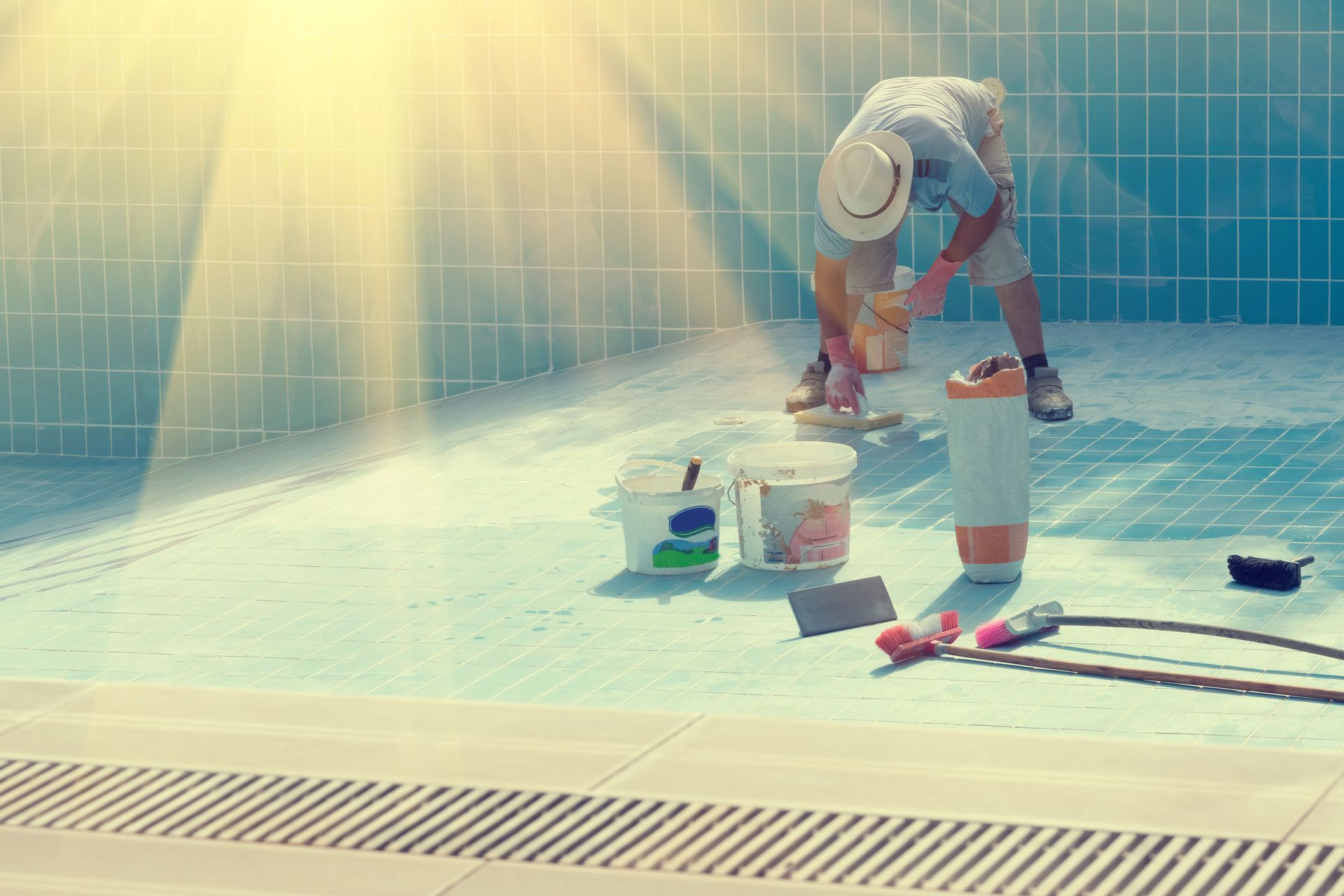
A replacement finish depends on a stable, carefully prepared base. Applying new material over loose sections would leave the separation unaddressed and could interfere with the bond of the replacement surface. Before resurfacing begins, pool resurfacing companies can identify unsound areas and complete the preparation required for a quality finish.
Damaged Waterline Tile and Coping
Waterline tile forms a visible boundary exposed continually to moisture, minerals, and changing water levels. Cracked or missing tiles, deteriorated grout, and loose pieces can disrupt that boundary and make surrounding wear more noticeable. Damage may become particularly visible as the water repeatedly rises and falls against the same section. Sharp edges or unstable pieces may also make areas swimmers touch less comfortable.
Coping frames the pool and creates the transition between the shell and surrounding deck. A loose, cracked, or shifted coping stone may reflect localized wear, impact, or movement that deserves evaluation rather than being treated only as a cosmetic flaw. Tile repair or replacement and coping stone installation can renew these components while creating a consistent border around the resurfaced interior.
Unexpected Water Loss or Greater Chemical Use
A falling water level does not automatically prove surface failure because evaporation and splash-out also reduce water volume. However, recurring loss accompanied by cracks, chips, or damaged joints may indicate that water is escaping through a minor opening. Considering these symptoms together gives a clearer picture than relying on the water level alone.
As a pool finish deteriorates, it may become more porous and less predictable. Owners may notice that maintaining balanced water requires more frequent attention, particularly when increased chemical use occurs alongside roughness, staining, or visible material loss. These observations cannot identify the precise condition alone, but they provide useful context during a resurfacing evaluation.
What the Full Pattern Reveals
One mark or rough patch captures only part of the pool's overall condition. The finish material, age, extent of deterioration, previous work, texture, water behavior, and relationship between affected areas all contribute to what a symptom may mean. By examining the full pattern, pool resurfacing companies can determine whether the pool would benefit from a new interior finish, tile work, coping installation, or a coordinated combination of those services.
Material selection can then address the intended appearance and feel of the pool. We provide a traditional plaster-style finish, while quartz and pebble surfaces offer different textures and visual characteristics. The selected texture also influences how the finished pool feels on steps, benches, and floors. Surface preparation, careful application, curing, refilling, and water balancing contribute to the performance of the selected material. These stages are especially important when the previous finish showed widespread wear, separation, or poor bonding.
Pool surface changes are easier to interpret when viewed as related signals rather than isolated flaws. A timely evaluation can clarify whether a condition is cosmetic, limited to tile or coping, or connected to deterioration that makes resurfacing appropriate. At Mr. Marcite, Inc, we provide surface evaluations and resurfacing. If you're looking for expert pool resurfacing companies, get in touch with our crew for the support you need!